


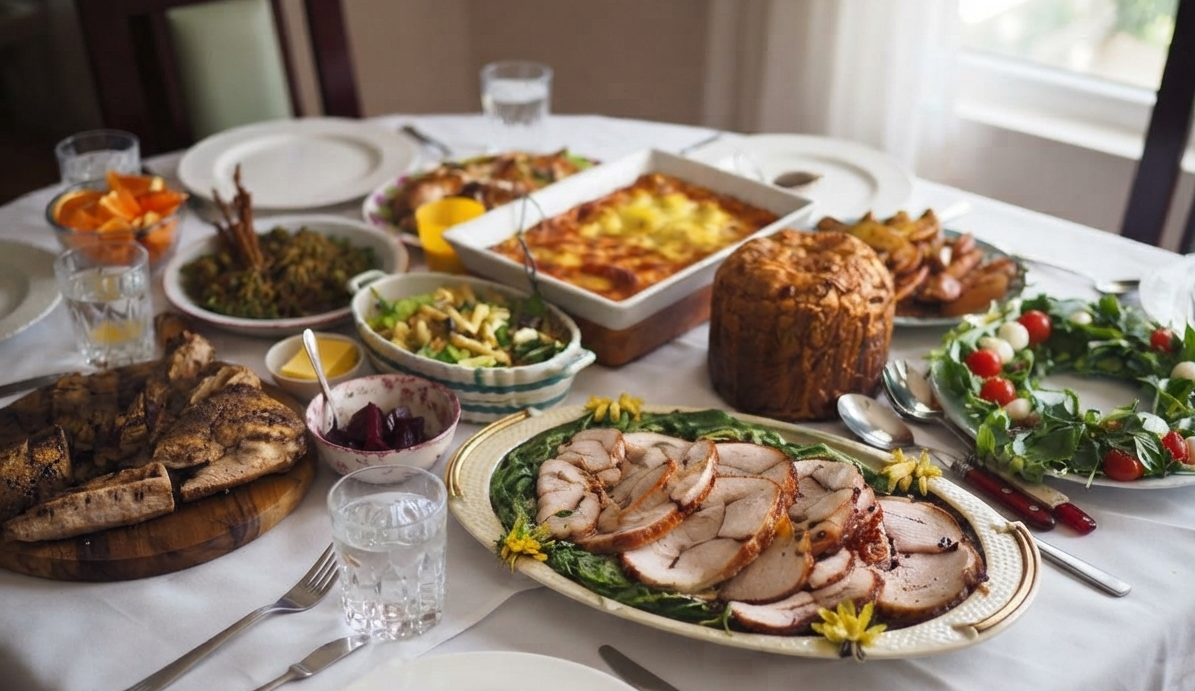
Picture this: your kitchen smells of garlic, rosemary, and slow-simmered tomato sauce, and somewhere in the background, a glass of Chianti is waiting. That’s the kind of scene that makes an Italian Christmas feel like the real thing. Traditional Italian Christmas Dishes run deep — we’re talking recipes tied to memory, place, and family pride, with flavors that have nothing to do with whatever’s trending and everything to do with what’s been working for centuries. From rich pastas to desserts that could make you forget dessert exists anywhere else, this is holiday cooking worth taking seriously.
The Essence of Traditional Italian Christmas Dishes
A Blend of History and Tradition
Here’s the thing about Traditional Italian Christmas Dishes — each one carries a story. We’re talking recipes handed down like heirlooms, tied to specific regions and specific kitchens. The classic lasagna from Emilia-Romagna, loaded with slow-cooked ragù and velvet-smooth béchamel. Tortellini in brodo, those tiny pasta parcels bobbing in a broth so comforting it should be prescribed. These aren’t just dishes. They’re a living record of Italy’s culinary history, and sitting down to eat them feels like participating in something much bigger than dinner.
Flavors and Textures Worth Talking About
Italian Christmas cuisine works on every level — the tangy sweetness of a good panettone with its cloud-like crumb and jewels of candied fruit, the silky tomato sauce clinging to tender baccalà, the way each bite manages to feel festive and familiar at the same time. Warmth, richness, depth. That’s the pattern. And once you’ve eaten your way through a proper Italian holiday spread, most other Christmas meals feel a little flat by comparison.
Bringing Families Together
More than anything, Traditional Italian Christmas Dishes are built for the table — the loud, chaotic, wonderful kind of table where everyone’s talking at once and someone’s already gone back for seconds. The food isn’t incidental. It *is* the gathering. It gives people a reason to linger, to argue lovingly about whose nonna made it better, and to feel connected to something beyond the present moment.
Antipasti: Italian Starters to Begin Your Feast
A Variety to Savor
A great antipasti spread is one of life’s underrated pleasures, and as the opening act of Traditional Italian Christmas Dishes, it sets expectations high. Prosciutto and salami, paper-thin and deeply savory. Burrata so fresh it practically sighs when you cut into it. Marinated olives, artichokes, roasted red peppers — all of it arranged on a board that looks almost too good to disturb. Almost. Throw in some olive oil-drenched bruschetta topped with ripe tomatoes and torn basil, and you’ve got a starting line-up that most meals could only dream of finishing.
Crafting the Perfect Plate
Building an antipasti platter is mostly about balance — a little cured meat against something creamy, a briny olive next to something roasted and sweet. Fresh herbs scattered on top don’t hurt either, both for looks and for that pop of fragrance. The goal isn’t perfection; it’s abundance and variety. That sense of plenty right from the start is exactly what the Italian Christmas spirit is about, and it primes everyone beautifully for what’s still coming. If you’re planning a full traditional Italian Christmas dinner, the antipasti course is where you set the tone — don’t rush through it.
Primi Piatti: Hearty Pastas and Risottos for Christmas
Savoring the Pastas
Homemade lasagna — proper lasagna, with layers of rich ragù, creamy béchamel, and pasta sheets cooked just right — is the kind of dish that stops conversation. People just eat. It’s a holiday staple across countless Italian households for good reason, and it earns its place every single time. For something a touch lighter but no less satisfying, tortellini in brodo is the move: delicate little pasta parcels floating in a clear, deeply flavored broth. It’s the food equivalent of a warm hug from someone who really knows what they’re doing.
Risottos: Creamy and Comforting
Risotto alla Milanese — saffron-gold, faintly fragrant, glowing on the plate — is the kind of dish that makes you slow down and pay attention. Mushroom risotto does something different: it’s earthy and grounding, deeply wintry in the best way. Both belong among the finest Traditional Italian Christmas Dishes, and both prove that rice, when treated with genuine care, can hold its own against any pasta on the table.
Secondi: Classic Italian Main Courses for the Holiday
Succulent Roasted Meats
Porchetta is the main event at many an Italian Christmas table, and it earns that spot. A whole pork roast seasoned with rosemary, garlic, and fennel, roasted until the skin crackles — it’s the kind of dish you smell before you see it. Carving it at the table feels almost ceremonial. Honestly, if you’ve never had good porchetta at Christmas, you’ve been missing out.
Comforting Seafood Choices
Coastal Italian families have long centered their Christmas around seafood, and baccalà is the crown jewel of that tradition. Salted cod, slowly rehydrated and then baked or braised with tomatoes and olives, develops a texture and depth that’s genuinely hard to describe to someone who hasn’t tried it. It tastes like the sea and the kitchen at the same time — briny but mellow, rich but never heavy.
Timeless Pasta Dishes
No rundown of Traditional Italian Christmas Dishes is complete without circling back to pasta. Lasagna alla Bolognese — ragù, béchamel, pasta — shows up again here as a secondi option in some households, and why wouldn’t it? It feeds a crowd, it travels well from oven to table, and it delivers every single time. Some classics stick around because they genuinely can’t be improved upon.
Dolce: Irresistible Italian Desserts to Conclude Your Celebration
Struffoli: Small But Mighty
Struffoli might be one of the most joyful things you’ll ever eat. Tiny fried dough balls, drizzled in honey, showered with colorful sprinkles — they look like a party and taste like one too. In Southern Italy, making struffoli is a family event unto itself: everyone gathers to fry and assemble, and by the time the platter hits the table, it’s already come with a side of laughter and shared effort. These are Traditional Italian Christmas Dishes in the truest sense — food that means more because of how it’s made and who you make it with.
Panettone: A Slice of Christmas Heaven
Panettone is, genuinely, one of the great achievements of holiday baking. That tall, domed loaf — airy and rich at once, packed with raisins and candied fruit — takes real skill and patience to pull off properly. It’s said to originate in Milan, but at this point it belongs to the whole world. Eat it plain, eat it with a spoonful of mascarpone, eat it dunked in espresso at midnight. There’s no wrong way. Each slice carries something unmistakably Italian about it — a kind of generous, unhurried pleasure that feels exactly right for the season.
FAQs
What are some Traditional Italian Christmas Dishes?
Italy does Christmas food right. The big hitters include lasagna al forno — layered with pasta, béchamel, and a proper meat ragù — and tortellini in brodo, those little filled pasta parcels served in steaming broth, which is exactly what you want on a cold December night. Capitone, a braised eel dish, shows up on tables across the south in particular. And then there are the sweets: panettone and pandoro, both light and festive, dusted with powdered sugar or drizzled with chocolate depending on who’s in charge of dessert.
Are these dishes enjoyed differently across Italy?
Very much so, and that’s part of what makes exploring Italian Christmas food so interesting — it changes dramatically depending on where you are. The north leans toward cappelletti in brodo and rich meat-based sauces. Sicily might feature pasta alla norma with eggplant and ricotta. Coastal regions go heavy on seafood: baccalà, zuppa di pesce, whole roasted fish. Every region has its own convictions about what belongs on the Christmas table, and every region is right — for their table, at least. Italy’s regional food culture is one of the reasons the country remains such a rewarding destination to travel through in Europe.
Can these dishes be made at home?
Absolutely, and you should try. Start with something like lasagna or a simple panettone — both are more forgiving than they look — and build your confidence from there. Your kitchen will smell incredible, your family will be impressed, and you’ll find yourself actually connected to a tradition that spans generations and regions. Buon Natale — and if cooking Italian food at home eventually inspires a trip to see the real thing, you might want to check out places to visit without a passport as a starting point for planning something closer to home first.